
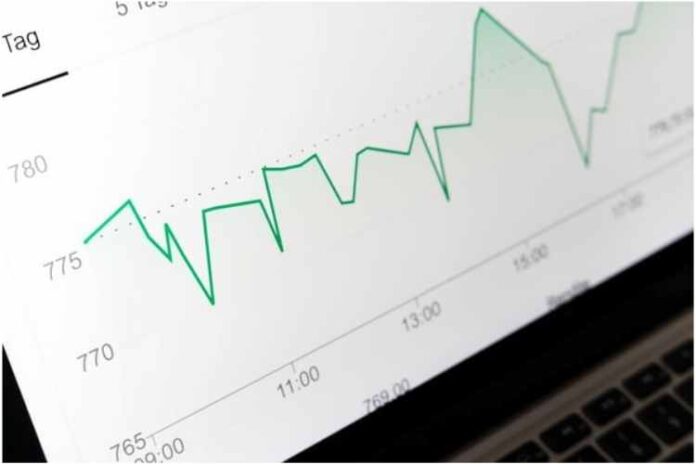
There are a few different ways to interpret a Kagi chart, but the most common is to use them to identify trends. Some traders believe that Kagi charts are more effective at identifying trends than other types of charts, such as candlestick charts. Others find them to be difficult to interpret. So, what are the pros and cons of Kagi charts? Keep reading to find out.
What are Kagi charts?
Before we discuss the disadvantages of Kagi charts, let’s first discuss the actual meaning of Kagi charts. Kagi charts are a type of technical analysis chart used to help traders predict future price movements. They are similar to candlestick charts, but instead of using open, high, low, and close prices, Kagi charts use the opening and closing costs only. Kagi charts can be used to indicate trend reversals and trend continuation.
The main advantage of Kagi charts is that they are less susceptible to data distortion than other types of charts. This makes them ideal for analyzing markets with high volatility or when there is a lot of news or additional information affecting the price. Another advantage of Kagi charts is that they are almost always used to identify trend reversals. The Kagi chart will show a series of rising bars when the price trend is up, and a series of falling bars when the trend is down. The rising and falling bars information can be helpful for traders who are looking to take advantage of price movements.
What factors should you consider before choosing this type of chart?
When considering whether or not to use a Kagi chart, there are several factors you should take into account. First, you need to decide if the graph is appropriate for the type of data you are working with. Kagi charts work best with price data that moves in a cyclical manner. They are not as effective when used with data that is trending or random in nature. Next, you need to determine if the time frame of your data matches what the Kagi chart can display. The longer the time frame, the more lag there will be between price changes and what is displayed on the chart.
Finally, you need to decide if having a visual representation of your data is important to you and whether or not a Kagi chart can provide that information. Kagi charts are less susceptible to data distortion because they rely on price changes rather than on point values. Point values can be distorted by outliers, whereas price changes are not as easily distorted. Additionally, Kagi charts are less sensitive to time lags, which can also distort point values.
What are the disadvantages of Kagi charts?
There are some disadvantages to using Kagi charts that should be considered before making any investment decisions. The main disadvantage of Kagi charts is that they can be difficult to read and interpret. The lines on the chart can be confusing, and it can be difficult to determine when a trend has changed or ended. Another disadvantage of Kagi charts is that they can be misleading when used in conjunction with indicators. When used with indicators, Kagi charts can sometimes produce signals that are not indicative of a change in the security trend. As a result, it is essential to be aware of the limitations of Kagi charts before making any investment decisions.
Conclusion
Overall, Kagi charts are a valuable tool for traders as they provide a visual representation of a security’s price movement. However, they are not without their drawbacks, so traders should use them in conjunction with other forms of analysis.

